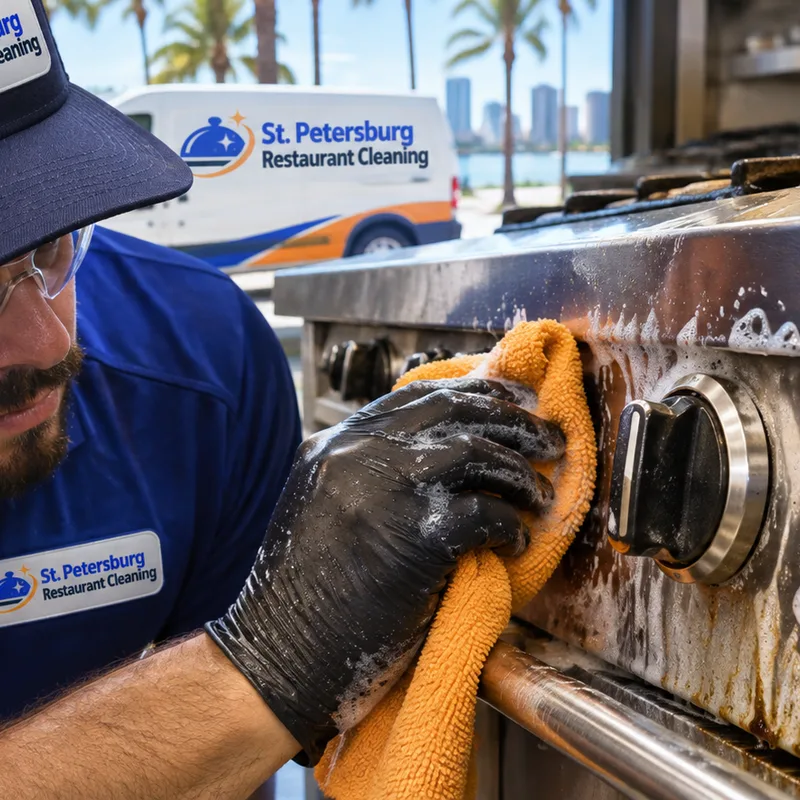
A trained cleaner degreasing stainless steel cooking equipment in an active Largo restaurant kitchen after service

Restaurant Cleaning · Largo

Restaurant Cleaning in Largo

Detailed kitchen and equipment care planned around operating hours, food-safety priorities, and the demands of a working restaurant.

✓Kitchen equipment
✓Food-contact areas
✓One-time or recurring
✓Planned around service

Service Scope

Dependable Restaurant Cleaning Largo Operators Can Schedule Around Service

Restaurant Cleaning Largo businesses can rely on starts with a written scope, a realistic schedule, and close attention to food-contact areas, cooking equipment, floors, and hard-to-reach grease deposits. St. Petersburg Restaurant Cleaning supports independent restaurants, bars, cafés, commissary kitchens, and other food-service operations with recurring or one-time cleaning tailored to the facility.

Our team cleans during agreed service windows so the work fits opening hours, closing procedures, deliveries, and kitchen preparation. Working from our St. Petersburg base, our restaurant specialists serving St. Petersburg, FL coordinate service for food-service operators in Largo and the surrounding Pinellas County area. Before service begins, we identify priority equipment, access limitations, sensitive surfaces, and any areas that require special handling.

A commercial kitchen is not cleaned like an office. Grease must be loosened with the right chemistry and dwell time, removable components must be handled correctly, and surfaces need a clean rinse without leaving slick residue. We also keep food-contact cleaning separate from floor and waste-area tasks to reduce cross-contamination.

Areas and Tasks

What a Restaurant Cleaning Plan Can Cover

Cooking Line and Equipment Exteriors

Degreasing for ranges, fryers, griddles, ovens, salamanders, stainless-steel panels, control surrounds, and accessible equipment sides. Components are moved or removed only when the approved scope and equipment design permit it.

Preparation and Food-Contact Areas

Cleaning for prep tables, sinks, shelving, splash areas, and other approved food-contact surfaces. The process accounts for the surface material and the product label's required dilution, contact time, rinse, and sanitizing directions.

Floors, Edges, and Drains

Scrubbing addresses grease film, soil at wall lines, equipment footprints, corners, and accessible floor drains. Particular care is taken around grout, anti-slip flooring, and transitions where residue can collect.

Walk-Ins and Storage Areas

Scheduled cleaning can cover accessible walk-in floors, shelving, door gaskets, exterior panels, and dry-storage areas after food and movable stock are cleared or protected by restaurant staff.

Dining and Guest Areas

The scope may include tables, seating, service stations, counters, high-touch points, and floors, with products and methods selected for each finish rather than one chemical used throughout.

Detail and Reset Cleaning

One-time deep cleaning is useful before an opening, after equipment changes, following a prolonged closure, or when recurring maintenance has fallen behind. The written scope defines what will be restored and what requires repair or specialist service.

Equipment Care

Restaurant Equipment Cleaning in Largo

Close view of a restaurant cleaner hand-degreasing the side and control surround of a stainless steel commercial range while protecting electrical openings
Equipment-specific methods protect finishes and sensitive controls.

Restaurant Equipment Cleaning Largo operators request should be based on the appliance, its finish, and the manufacturer's care instructions. Stainless steel tolerates many commercial degreasers, but aluminum, painted panels, stone, rubber gaskets, electrical controls, and seasoned cooking surfaces may require different products or methods. More aggressive chemistry is not automatically more effective.

The safe process begins with shutdown and cool-down requirements. Staff should remove food and advise the cleaning crew about pilot lights, gas controls, electrical isolation, delicate components, and equipment that cannot be moved. Cleaners can then address approved exterior and accessible interior surfaces without spraying liquids into motors, control panels, burners, or electrical openings.

Routine appliance cleaning is distinct from exhaust-system service. Grease removal from accessible hood exteriors may be included, but work inside ducts, fans, and rooftop exhaust components requires the appropriate specialist scope. Likewise, a cleaner can remove soil from an accessible refrigerator coil only when that task has been approved and can be performed safely; mechanical diagnosis and repair belong to qualified technicians.

Service Process

How the Cleaning Process Works

  1. 01

    Walk Through the Facility

    We review the cooking line, prep space, storage, floors, dining areas, and access points. The walkthrough identifies current soil levels, fragile finishes, shutdown requirements, and tasks that restaurant staff must complete before arrival.

  2. 02

    Set the Scope and Service Window

    The written plan lists included areas, exclusions, frequency, access arrangements, and expected preparation. Work can be organized as a one-time deep clean or a recurring program based on production volume and operating hours.

  3. 03

    Prepare and Protect

    Food, utensils, smallwares, and exposed ingredients are removed or covered as agreed. Equipment is cooled and isolated when required, and cleaning tools are separated by task to limit cross-contamination.

  4. 04

    Clean in a Controlled Sequence

    The crew generally works from higher surfaces toward lower ones and from cleaner zones toward heavily soiled zones. Degreasers receive suitable dwell time, soil is agitated, and surfaces are rinsed or wiped according to product directions.

  5. 05

    Inspect and Document

    Completed areas are checked against the scope before the kitchen returns to normal use. Any inaccessible buildup, damaged sealant, failing grout, loose components, or maintenance concern observed during cleaning can be reported to the operator.

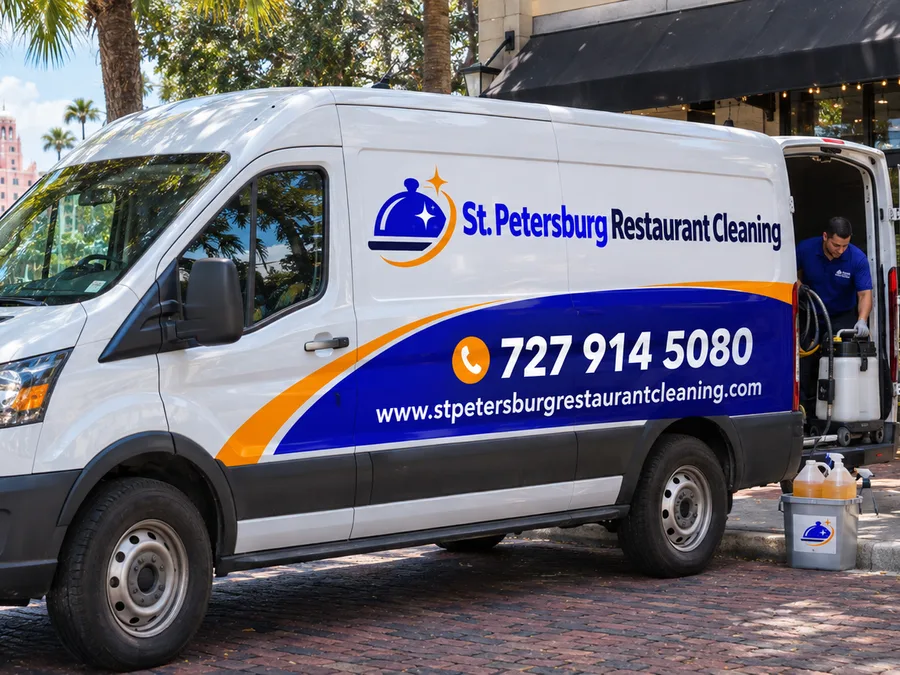
A commercial cleaning crew unloading labeled restaurant cleaning tools outside a Largo food-service business during a quiet service window

Local Planning

Cleaning That Accounts for Largo's Operating Conditions

Largo restaurants operate in a warm, humid Gulf Coast climate. Moisture brought through delivery doors and kitchen entrances can combine with grease on floors, increasing the need for careful scrubbing, rinsing, and drying. High humidity also makes it unwise to leave standing water around floor transitions, wall bases, storage areas, or equipment feet.

Different commercial settings create different access and scheduling needs. Restaurants near Largo Mall may need work planned around retail traffic and shared loading areas. Operators along West Bay Drive often have limited windows between closing duties and morning preparation. Food businesses near Indian Rocks Road can experience seasonal demand tied to travel toward the Gulf beaches, which may change the practical frequency of deep cleaning.

Restaurant cleaning also supports, but does not replace, an operator's food-safety program. The Florida Department of Business and Professional Regulation regulates many public food-service establishments in the state. Each operator remains responsible for its required sanitation practices, employee procedures, pest control, temperature controls, and inspection readiness.

Recurring Service

Build a Schedule Around the Way Your Kitchen Works

Cleaning frequency should reflect cooking volume, menu, equipment, staffing, hours, and the rate at which grease and food debris accumulate. A high-output fryer line may need frequent degreasing, while walls behind movable equipment or walk-in shelving may fit a less frequent rotation. Fixed schedules are useful, but the task list should still match actual conditions.

A sound plan separates daily staff duties from contracted detail work. Restaurant employees commonly handle immediate spills, food-contact sanitation during production, trash removal, and closing procedures. A professional crew can then focus on labor-intensive buildup, floor edges, accessible equipment surrounds, storage areas, and other work assigned in the service agreement.

Consistency depends on access. The restaurant should identify who provides entry, where cleaning supplies or water can be used, which alarms require instructions, and who can approve additional work if hidden buildup is found. Clear responsibilities reduce interruptions and help the crew finish before cooks, deliveries, or opening staff arrive.

Local Pricing

How Much Does Restaurant Cleaning Cost in Largo?

Recurring restaurant cleaning in Largo typically ranges from about $300 to $1,200 per visit, while a large or heavily soiled deep clean may range from about $1,000 to $4,000 or more. These are general, nonbinding estimates rather than quoted prices.

Final cost depends on kitchen size, soil and grease levels, equipment count, service frequency, access, operating window, and whether dining, storage, or walk-in areas are included. Specialized exhaust work and repairs are usually separate. The exact price is confirmed after a facility walkthrough and written scope.

Request a Callback

A facility walkthrough can turn a general cleaning request into a clear task list, practical service window, and quote based on the kitchen's actual condition.

Call for a Free Quote

Practical Answers

Questions Largo Restaurant Operators Ask

Can restaurant cleaning be completed after closing?

Yes, service can often be scheduled after closing or during another agreed low-activity window. The best time depends on staff closing duties, equipment cool-down, alarm access, deliveries, and when preparation begins the next day. Largo restaurants with tight overnight windows may benefit from rotating detail tasks across scheduled visits rather than attempting every task at once.

How often should a commercial kitchen receive deep cleaning?

The right frequency depends on cooking volume, menu, equipment, and how quickly grease accumulates. Fryer-heavy kitchens usually require more frequent line degreasing than low-grease operations, while less accessible areas may follow a weekly, monthly, or custom rotation. Daily employee sanitation should continue between professional visits.

Do you clean behind and underneath restaurant equipment?

Accessible areas behind and beneath equipment can be included when the equipment can be moved safely and the task is listed in the scope. Gas-connected, hardwired, built-in, extremely heavy, or unstable appliances should not be moved by a cleaning crew unless qualified personnel have prepared them. The walkthrough identifies these restrictions before pricing.

Are cleaning and sanitizing the same step?

No, cleaning removes grease, food residue, and other soil, while sanitizing follows on an already clean surface using an approved product at its labeled concentration and contact time. Food-contact surfaces may also require a potable-water rinse depending on the product label. The restaurant's approved sanitation procedures remain the controlling standard.

Can you clean restaurant equipment without damaging stainless steel?

Yes, stainless steel can be cleaned safely when the method matches the finish and the manufacturer's instructions. Cleaners should avoid inappropriate abrasives, work with the grain when practical, keep liquid away from electrical openings, and test unfamiliar products on a small area. Aluminum, painted steel, gaskets, and control panels need separate treatment.

What should our staff do before the crew arrives?

Staff should remove or secure food, utensils, smallwares, and personal items from the agreed work areas. Equipment must be shut down and cooled as required, and the crew needs clear instructions for entry, alarms, water access, waste handling, and any appliance that must not be moved or sprayed.

Does routine restaurant cleaning include the complete hood and exhaust system?

Complete hood and exhaust-system cleaning is generally a separate specialist service. Routine work may include approved, accessible hood exterior surfaces, but internal ductwork, fans, filters, and rooftop components should be addressed under a scope appropriate to the exhaust system. Confirm the exact boundary during the facility walkthrough.

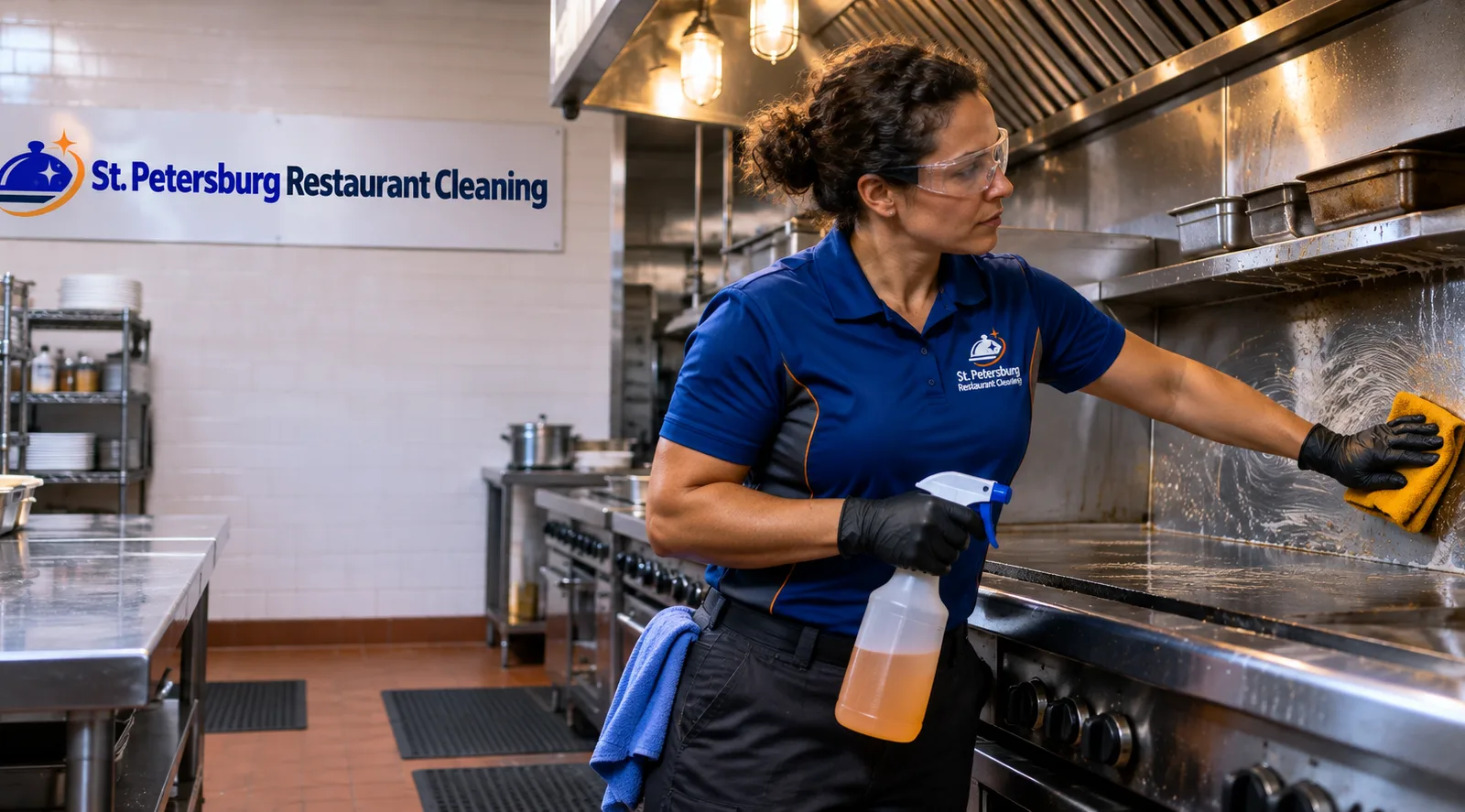
Plan the Work

Plan a Cleaner, More Manageable Restaurant Kitchen

Tell St. Petersburg Restaurant Cleaning about your facility, operating hours, equipment, and priority areas. We can arrange a walkthrough and prepare a written scope for one-time or recurring restaurant cleaning in Largo.