
Cooking-Line Degreasing
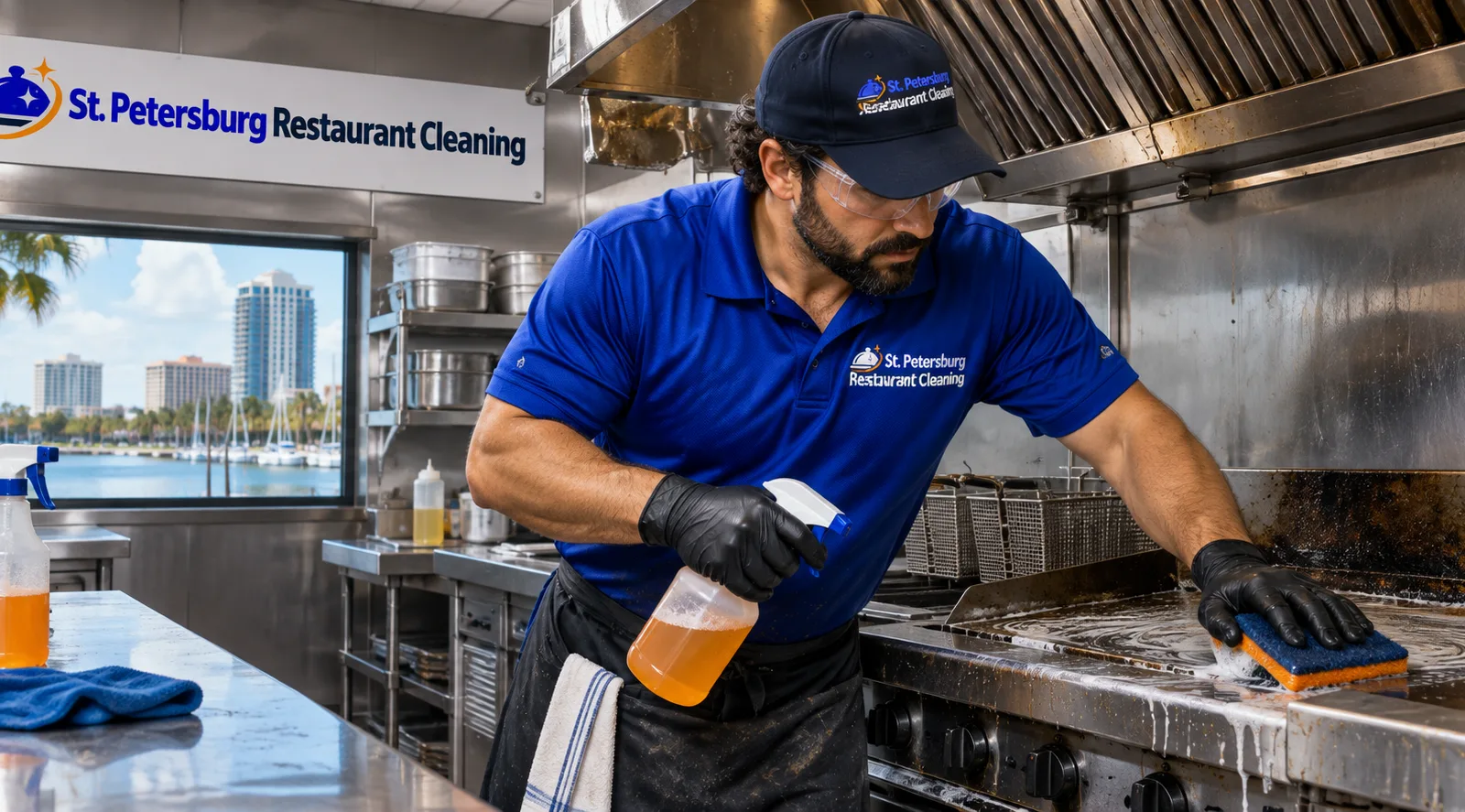
Degreasing may cover accessible surfaces on ranges, fryers, griddles, ovens, salamanders, and surrounding stainless steel. The scope identifies removable components and areas that must remain dry.
Serving St. Petersburg, Florida & surrounding areas
Commercial Kitchen Cleaning · St. Petersburg
Detailed commercial cleaning for cooking lines, equipment, floors, walls, and food-preparation areas, scheduled around your operation.
A written, kitchen-specific scope clarifies equipment access, preparation duties, sensitive components, service timing, and drying requirements before work starts.
Service Scope
Kitchen Cleaning Services should address the grease, carbon, food residue, and hard-to-reach buildup that routine shift cleaning may leave behind. St. Petersburg Restaurant Cleaning develops a written scope around the equipment, surfaces, access conditions, and operating schedule at each facility. The goal is a cleaner workspace without treating every kitchen as though it has the same layout or workload.
As a professional restaurant company in St. Petersburg, we plan the work around commercial kitchens and the practical demands of food-service operations. That includes confirming which appliances can be moved, identifying sensitive controls and electrical components, and separating wet cleaning from areas that require controlled hand detailing. We can schedule recurring professional kitchen cleaning or a focused deep clean for accumulated residue.
Local conditions matter. St. Petersburg's warm, humid climate can make moisture control especially important after washing floors, walls, and equipment surrounds. Waterfront districts such as Downtown St. Petersburg also have dense dining activity and tight service windows, while Central Avenue businesses may have limited loading or back-of-house access. Those factors affect crew planning, equipment staging, and drying time.
Areas and Tasks
Degreasing may cover accessible surfaces on ranges, fryers, griddles, ovens, salamanders, and surrounding stainless steel. The scope identifies removable components and areas that must remain dry.
Exterior panels, legs, casters, shelves, handles, knobs, and reachable spaces beneath or behind equipment receive detailed attention. Manufacturer care requirements guide the methods used on sensitive finishes.
Service can address tile, grout lines, mats, corners, edges, and buildup around equipment feet. Grease-cutting chemistry, agitation, recovery, rinsing, and drying are matched to the floor material.
Washable wall panels, doors, base areas, shelving, and splash zones can be cleaned where grease mist and food residue collect. Painted or porous surfaces are assessed before stronger products are used.
Prep tables, accessible shelving, sinks, and selected storage areas can be included after food, utensils, and loose goods are removed or protected according to the agreed preparation plan.
A commercial kitchen deep cleaning can focus on neglected zones, end-of-lease needs, seasonal maintenance, or preparation for an internal review. The exact areas are documented before work begins.
Detailed Cleaning
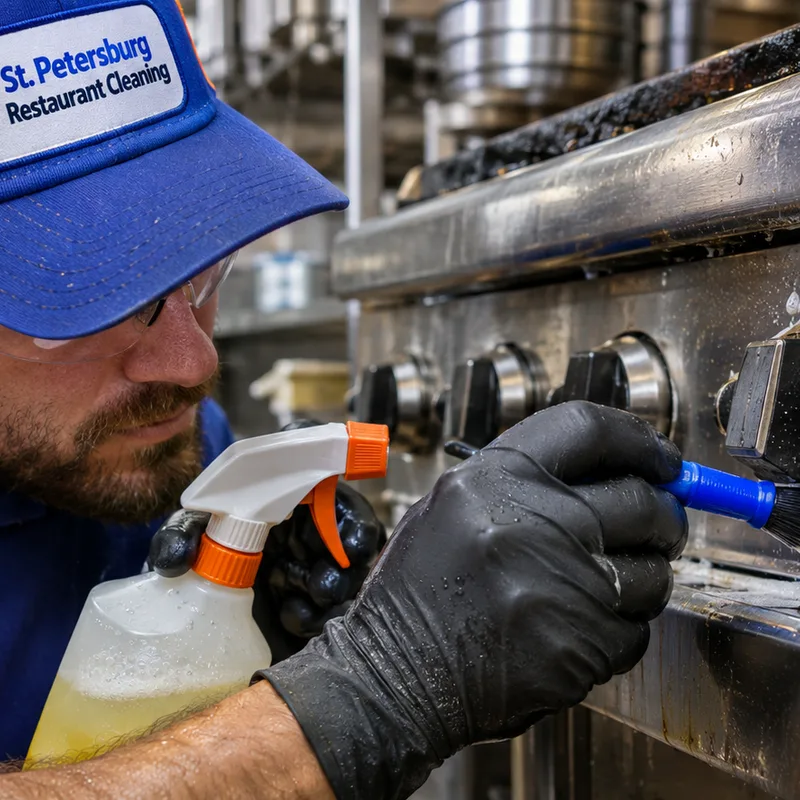
Daily closing routines have a different purpose than periodic deep cleaning. Staff commonly handle food-contact surfaces, spills, dishes, and visible debris during normal operations. Deep cleaning targets fixed buildup around equipment, floor perimeters, wall junctions, casters, undersides, and other areas that require more time, access, or specialized tools.
A knowledgeable kitchen cleaning company distinguishes cleaning from sanitizing. Cleaning removes soil and grease. Sanitizing is a separate step performed on a properly cleaned surface with a suitable product, concentration, and contact time. Our scope states which tasks are included, what preparation the operator must complete, and whether any food-contact areas require a separate sanitation procedure under the facility's own food-safety plan.
We also keep this work distinct from kitchen exhaust-system service. Accessible hood exteriors may be included when agreed, but internal ducts, fans, and fire-suppression components require the appropriate specialist. Clear boundaries help managers understand exactly what the restaurant kitchen cleaners will handle.
Service Process
We review the cooking line, preparation zones, floors, walls, equipment access, utility connections, and any surfaces with special care requirements. The walkthrough also identifies areas that cannot be disturbed.
The written scope lists included equipment and surfaces, exclusions, preparation duties, expected access, and the service window. Scheduling may be arranged after closing, during a planned shutdown, or at another practical time.
Food, utensils, packaging, and small appliances are removed or protected as agreed. Cleaners isolate sensitive components, place warning signs, and prepare tools and chemistry for the soil and surface types.
Crews apply the selected cleaning method, allow suitable dwell time, agitate stubborn residue, and recover loosened soil. Controlled rinsing or wiping limits overspray around controls, outlets, and adjacent areas.
The completed work is checked against the scope. Accessible items are returned to the agreed position, floors are left to dry, and the manager is told about any damage, inaccessible buildup, or maintenance concern observed during cleaning.
Local Planning
Restaurant formats across St. Petersburg create different cleaning demands. Downtown kitchens may operate in compact spaces with shared service access, so equipment movement and waste handling need careful coordination. Grand Central District restaurants often face busy evening schedules, making after-hours work or a planned dark period more practical. In Historic Kenwood, commercial spaces near residential streets may require quieter staging and considerate arrival times. Beach Drive dining rooms can also place extra importance on keeping front-of-house routes clear while back-of-house work proceeds.
Florida humidity makes complete moisture recovery and airflow part of the plan. Standing water should not be left around equipment legs, floor-wall junctions, or low spots. When equipment is moved, utility lines and manufacturer clearance requirements must be respected; cleaners should never disconnect gas, water, or electrical connections unless specifically qualified and authorized to do so.
Recurring service frequency depends on cooking volume, menu, equipment type, and the amount of aerosolized grease produced. Fry-heavy kitchens generally need more frequent attention around the line than low-volume preparation facilities. A walkthrough provides a sound basis for choosing weekly, monthly, quarterly, or condition-based service.
Local Pricing
Commercial kitchen cleaning in St. Petersburg typically ranges from about $500 to $2,500, while large, heavily soiled, or multi-zone kitchens may cost more. A limited equipment or floor service can fall below that range; a full line, walls, floors, and movable-equipment scope usually falls higher.
Final pricing changes with kitchen size, grease accumulation, appliance count, access, required disassembly, service timing, and whether equipment can be moved safely. A walkthrough confirms the exact scope and cost before service is scheduled.
Request a CallbackGet a written cleaning scope that identifies the equipment, surfaces, preparation duties, exclusions, and schedule before work begins.
Call for a Free QuotePractical Answers
A focused service may take several hours, while a full deep clean can require an entire closed shift or more. Kitchen size, equipment count, grease buildup, access, and drying requirements determine the schedule. Compact Downtown St. Petersburg kitchens can take additional planning when aisles and staging areas are limited.
Yes, after-hours cleaning is often available when access and service duration are agreed in advance. The kitchen must stop food production, cool applicable equipment, and complete the preparation stated in the scope. Grand Central District restaurants with late service may prefer a planned closure or an early-morning window.
Movable equipment can be repositioned when doing so is safe and included in the scope. Cleaners should not strain rigid utility lines, alter fire-suppression components, or disconnect gas and electrical connections without proper authorization and qualifications. The initial walkthrough identifies equipment that must remain in place.
Exposed food, utensils, disposable packaging, and loose preparation items generally need to be removed or securely protected before cleaning begins. The preparation list will identify what your staff must clear. This protects inventory and gives the crew access to shelves, tables, walls, and equipment surrounds.
The right interval depends on cooking volume, menu, grease production, staffing routines, and equipment layout. A high-output fryer line may need frequent degreasing, while a lower-volume prep kitchen may use a monthly or quarterly deep-clean schedule. St. Petersburg's humid climate also makes prompt drying and moisture control important after each visit.
Sanitizing is included only when it is specifically listed in the agreed scope. Soil and grease must first be removed, then an appropriate sanitizer must remain wet for its labeled contact time. The facility should confirm how the service fits its food-safety procedures and any applicable regulatory requirements.
Internal hood, duct, fan, and fire-suppression cleaning is not assumed to be part of general kitchen cleaning. Accessible exterior hood surfaces may be included if listed in the scope. Exhaust systems require specialist methods and should be handled under a separate, clearly defined service.
Compare the written scope, exclusions, surface-specific methods, access plan, drying process, and procedures around utilities and sensitive controls. Ask who prepares the kitchen, whether equipment movement is included, and how added work is approved. A clear walkthrough is more useful than comparing prices without matching scopes.
Plan the Work
Tell St. Petersburg Restaurant Cleaning about your kitchen, equipment, operating hours, and problem areas. We will help define a practical scope and service schedule for the space.