
Kitchen and back-of-house areas
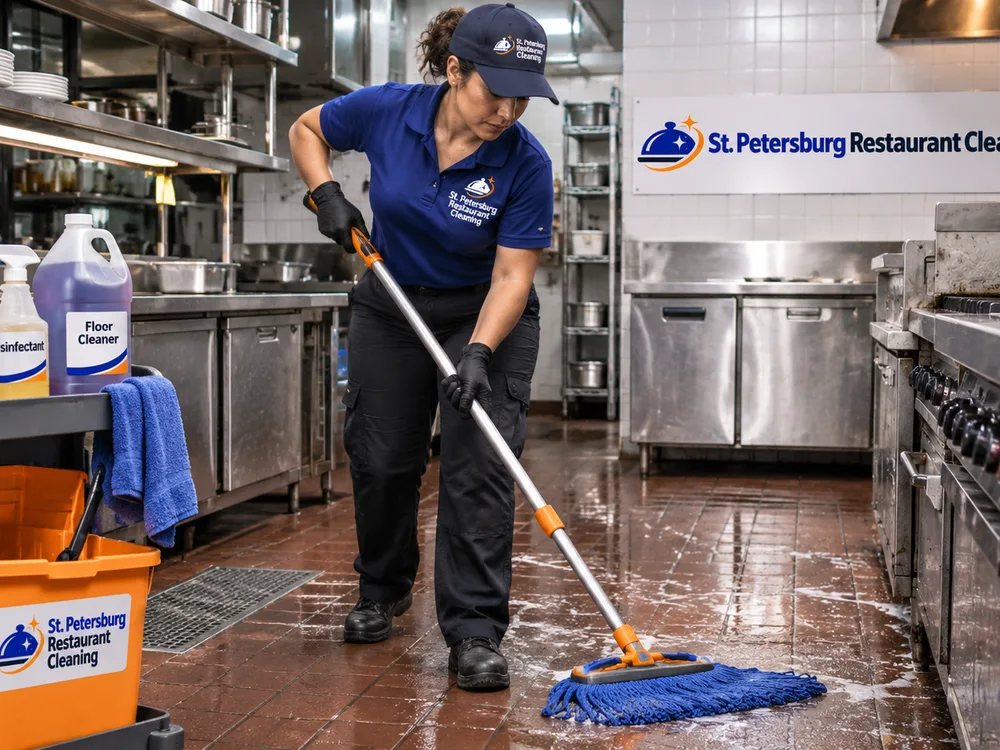
Sweep, mop, and degrease agreed floor areas; clean floor edges and accessible surfaces; remove designated waste; and address recurring soil around prep lines, dish areas, and service paths.
Serving St. Petersburg, Florida & surrounding areas
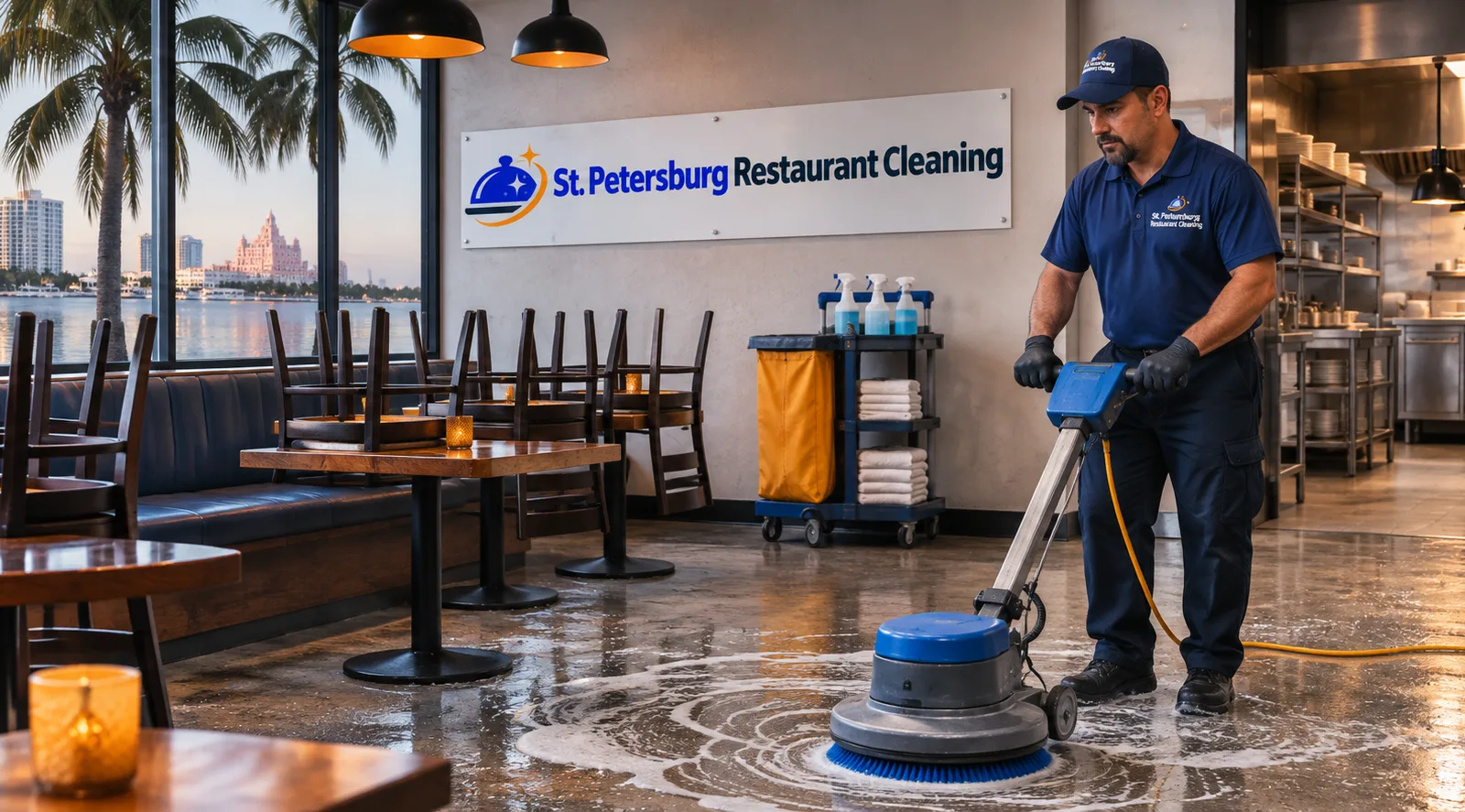
Overnight Cleaning · St. Petersburg
Walk into a clean kitchen, dining room, and restroom after every scheduled visit, with a nightly scope built around your closing routine and opening deadline.
Opening-Ready Cleaning
Overnight Restaurant Cleaning gives your staff a reset space for the next service. After the last guests leave, the work can cover food-contact-adjacent surfaces, floors, fixtures, dining areas, restrooms, and other agreed locations without disrupting customers or competing with normal operations.
St. Petersburg restaurants face conditions that make consistency matter. Sand and grit can enter with guests after time near the waterfront, while Florida humidity can make neglected residue and restroom odors more noticeable. Downtown dining rooms may also experience concentrated foot traffic around events and weekend evenings. A written nightly checklist keeps these recurring issues from becoming opening-shift problems.
St. Petersburg Restaurant Cleaning provides restaurant specialists serving St. Petersburg who work from a defined scope rather than relying on a vague general clean. The plan identifies included rooms, approved products, service frequency, alarm and key procedures, closing access, and the time the building must be ready. That structure supports dependable results across repeated visits.
Service Scope
The right scope follows the way your restaurant operates. In the dining room, work may include wiping tables and chair contact points, cleaning ledges, spot-cleaning glass, removing accessible debris, and vacuuming or mopping floors. Entry areas receive attention because tracked-in sand, moisture, and street soil can quickly affect the first impression.
Back-of-house restaurant janitorial cleaning may include sweeping and degreasing floors, cleaning floor edges, wiping exterior equipment surfaces, emptying designated waste containers, and cleaning sinks or non-food-contact surfaces listed in the agreement. Degreasers need suitable dwell time, and floor products must match the surface. Quarry tile, sealed concrete, luxury vinyl, and coated floors do not all respond to the same chemical or agitation method.
Daily restaurant cleaning can also include staff areas, service stations, corridors, and waste staging points. Hood, duct, grease-trap, pest-control, and equipment-interior work are specialized tasks and should be identified separately rather than assumed to be part of routine janitorial service.
Nightly Checklist
Sweep, mop, and degrease agreed floor areas; clean floor edges and accessible surfaces; remove designated waste; and address recurring soil around prep lines, dish areas, and service paths.
Clean floors, tables, chairs, ledges, entry glass, and other agreed touchpoints after guests leave. Cleaning can be sequenced around furniture placement and the closing crew's final duties.
Clean and disinfect toilets, urinals, sinks, faucets, counters, partitions, dispensers, mirrors, and floors. Supplies can be restocked when they are provided and included in the scope.
Remove grit, tracked moisture, crumbs, and visible soil at entrances and along primary walking routes. These areas often need added attention after busy nights or wet weather.
Empty included receptacles, replace liners, and move bagged waste to the agreed collection point. The plan should specify handling rules for broken glass, liquids, cardboard, and cooking waste.
Use a location-specific checklist and escalation process for missed access, unusual soil, leaks, damage, or safety concerns discovered during the visit.
Service Process
Review the kitchen, dining room, restrooms, entrances, service stations, staff areas, and waste route. The walkthrough identifies floor materials, soil levels, access limits, and tasks that require specialized contractors.
List each included task and its frequency. Some work belongs on every visit, while lower-use areas or detail cleaning may fit a rotating schedule.
Set arrival windows, alarm instructions, lockup responsibilities, key or credential controls, and a reliable point of contact. Downtown access, shared loading areas, and late closing times should be addressed before service begins.
The crew follows the approved sequence so kitchen soil is not carried into guest areas. Chemicals are used according to their labels, including required dilution and contact or dwell time.
Early visits reveal whether the scope and allotted time match actual conditions. Feedback, seasonal traffic, menu changes, and revised operating hours can be incorporated into the recurring plan.
Restroom Standards
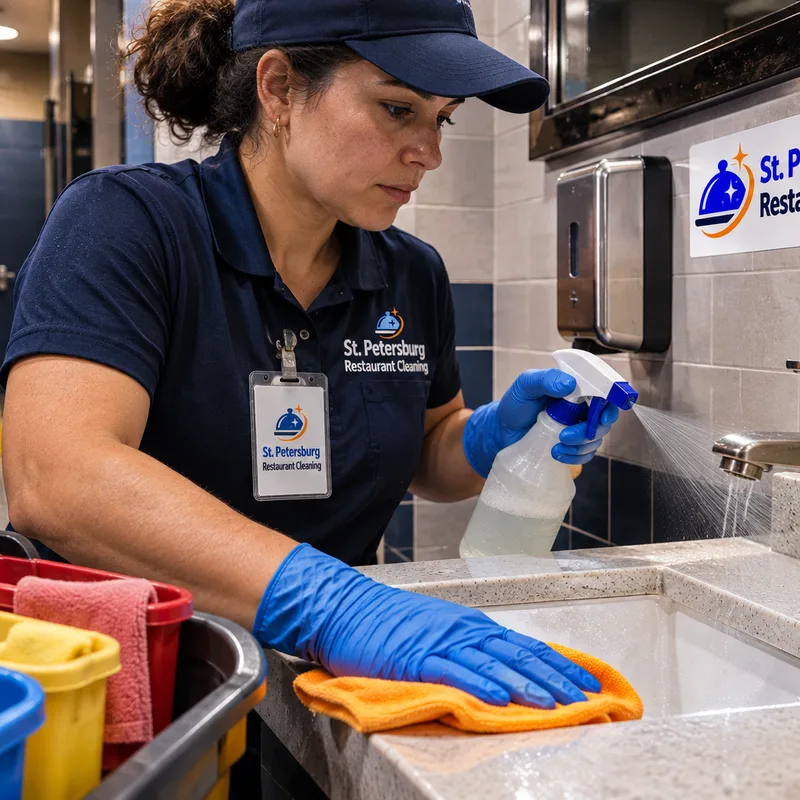
Guests notice restroom condition quickly. A proper routine removes visible soil first, then applies the appropriate disinfectant to compatible surfaces for the label-specified contact time. Spraying and immediately wiping may not provide the required dwell time. High-touch points such as handles, latches, faucet controls, dispensers, and baby-changing surfaces need deliberate attention.
Odor control starts with soil removal. Floors, grout lines, fixture bases, wall edges, drains, and waste containers should be inspected because fragrance alone does not remove the source. Cleaning tools used in restrooms should remain separate from tools used in kitchens and dining rooms to reduce cross-contamination.
For nightly restaurant cleaning in St. Petersburg, restroom plans should also account for wet-weather tracking and busy event nights. Restocking levels, dispenser types, floor signs, and supply storage need to be settled during setup so the crew can complete the work without searching for materials.
Choosing a Provider
A dependable restaurant janitorial company should describe the work in writing. Look for room-by-room tasks, frequencies, exclusions, access procedures, supply responsibilities, and a method for reporting issues. Confirm how the company handles schedule changes, holiday hours, unexpectedly late closings, and areas that cannot be accessed during a visit.
Product selection also matters. Foodservice environments require clear controls for chemical labeling, dilution, storage, and cross-contamination. Safety Data Sheets should be available for workplace chemicals, and products must be used according to manufacturer labels. Cleaning removes soil; sanitizing and disinfecting are distinct processes with different products, target surfaces, and contact times.
Ask how recurring restaurant cleaning is reviewed after startup. A useful review checks whether the allotted labor matches the actual soil load, whether floor methods suit the installed materials, and whether restroom and entryway standards hold through busy service periods. Pricing should be tied to this observed scope, not an unsupported promise made without seeing the facility.
Request a CallbackLocal Pricing
Recurring overnight restaurant cleaning in St. Petersburg typically ranges from about $1,200 to $6,000 or more per month. A small dining room with limited nightly tasks may fall near the lower end, while a large restaurant with a full kitchen, multiple restrooms, heavy grease, and seven-night service can cost more.
Final pricing depends on square footage, visit frequency, floor materials, soil level, cleaning time, supply responsibilities, access, and specialized exclusions. The exact cost is confirmed after a facility walkthrough and written scope review.
Settle the rooms, frequencies, access plan, and opening deadline before service begins, then receive a cleaning scope matched to the way your restaurant closes each night.
Call for a Free QuotePractical Answers
Yes, service can be scheduled around a late closing when the access window leaves enough time to finish before staff return. The plan should state the earliest entry time, required completion time, alarm procedure, lockup responsibility, and what happens when guests remain past closing.
The right frequency depends on operating days, traffic, menu, kitchen soil, and restroom use. Restaurants open daily often need nightly attention in kitchens, restrooms, dining areas, and entries, while selected detail tasks can rotate across the week. A walkthrough determines whether daily restaurant cleaning or a different recurring schedule fits the actual workload.
Routine janitorial service generally does not include exhaust-hood systems, ductwork, rooftop fans, or grease-trap pumping unless these are expressly contracted as specialized work. The written scope should distinguish janitorial floor and surface cleaning from regulated or equipment-specific maintenance.
Supply responsibility is set in the service agreement. The restaurant may provide consumables such as liners, toilet tissue, towels, and hand soap, while the cleaning company supplies its working chemicals and equipment, or another arrangement can be documented during the St. Petersburg facility walkthrough.
Cross-contamination is reduced by separating tools by area, cleaning in a planned sequence, changing soiled solutions, and following product labels. Color-coded cloths and mop equipment can help distinguish restroom tools from those used in dining and back-of-house spaces.
Yes, a recurring plan can be adjusted when longer hours or heavier guest traffic increase soil and waste. Restaurants near downtown event activity or waterfront destinations may need added entry, floor, restroom, or waste tasks during specific periods, with the revised work approved before the schedule changes.
Plan Your Nightly Service
Share your operating schedule, facility needs, and problem areas with St. Petersburg Restaurant Cleaning. A walkthrough can turn those details into a practical written scope for kitchens, dining areas, restrooms, and agreed support spaces.