
Kitchen and Prep Areas
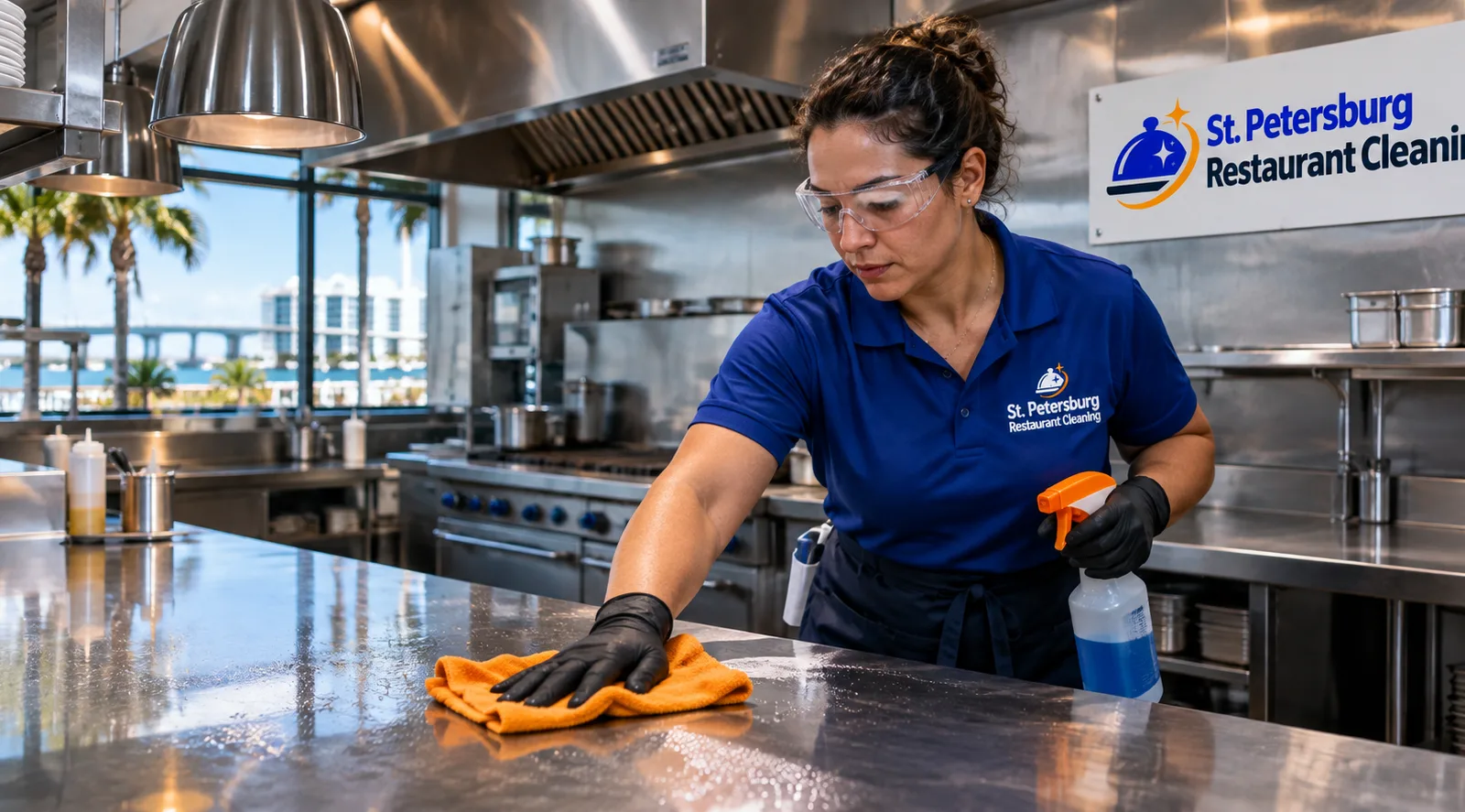
Accessible counters, splash zones, exterior equipment panels, shelving, sinks, floors, and floor edges can be assigned by frequency. The crew follows agreed procedures around food, utensils, and equipment.
Serving St. Petersburg, Florida & surrounding areas
Restaurant Cleaning · Clearwater
Detailed commercial cleaning for kitchens, dining rooms, restrooms, and guest touchpoints, scheduled around your operating hours.
Clearwater Restaurant Care
Restaurant Cleaning Clearwater requires more than a quick pass over floors and counters. Food residue, grease, tracked-in sand, fingerprints, and restroom traffic can build up during a single service period. A written cleaning scope assigns each task, identifies the products suitable for each surface, and sets a schedule that does not interfere with food preparation or guests.
St. Petersburg Restaurant Cleaning provides recurring and detailed cleaning for independent restaurants, cafés, bars, and other food-service businesses in Clearwater. Our crew brings the same careful communication and respect for property to every commercial assignment. Before service begins, we discuss operating hours, access, priority areas, floor materials, and any equipment that requires special handling.
Clearwater's coastal setting creates practical cleaning demands. Fine sand can reach entrance mats and dining-room floors, while warm, humid conditions make moisture control important around sinks, dish areas, restrooms, and waste stations. Restaurants near Clearwater Beach may also face concentrated guest traffic and frequent floor care needs. Downtown dining rooms often need work completed within tight windows between closing and the next day's opening. The cleaning plan should fit those conditions rather than rely on a generic checklist.
Service Scope
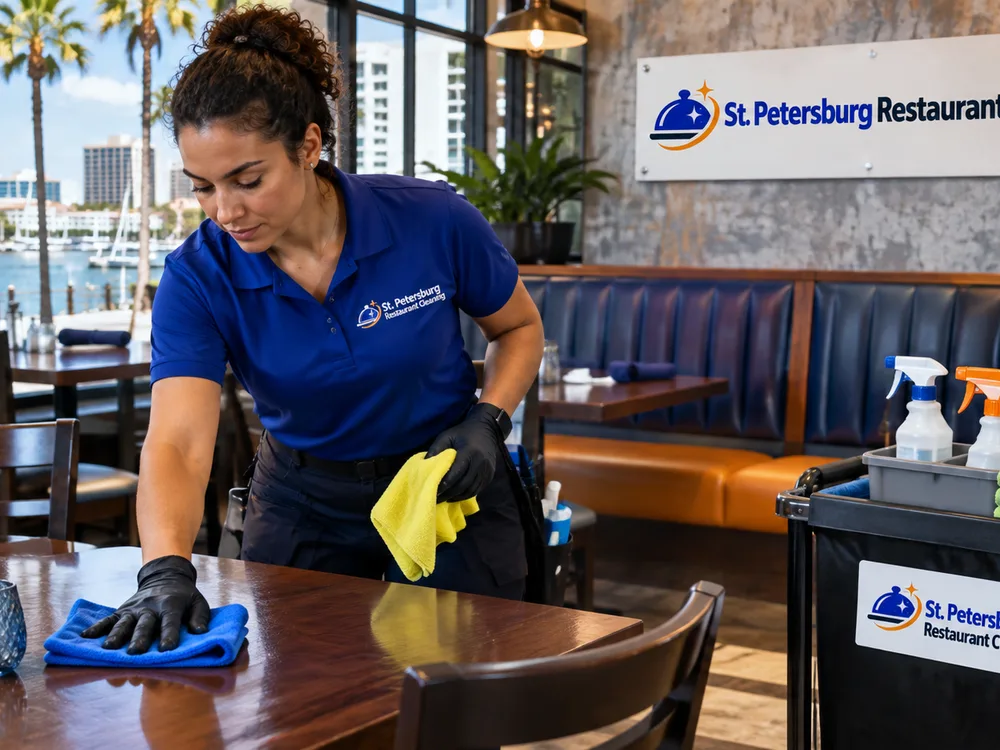
A restaurant contains several cleaning zones, and each has different soil, surface, and sanitation needs. Dining rooms may need table bases, chair legs, booths, ledges, host stations, glass, and floors addressed. Guest-facing work can also include entrance doors, menus or menu holders, payment terminals, condiment stations, and other high-touch surfaces.
Back-of-house cleaning may cover accessible preparation surfaces, sinks, splash areas, exterior equipment surfaces, shelving, walls, floors, floor drains, and waste collection points. Degreasing products need proper dwell time, which is the period a product remains wet and in contact with soil before removal. Disinfectants also require the label-specified contact time to work as intended. Food-contact surfaces must be treated with products and procedures appropriate for those surfaces, then rinsed when the product label requires it.
Restroom service can include toilets, urinals, sinks, partitions, mirrors, dispensers, fixtures, floors, and touchpoints such as handles and latches. The exact scope is documented before work starts so managers know which duties belong to the cleaning crew and which remain with restaurant staff, pest-control providers, hood specialists, or equipment technicians.
Areas and Tasks
Accessible counters, splash zones, exterior equipment panels, shelving, sinks, floors, and floor edges can be assigned by frequency. The crew follows agreed procedures around food, utensils, and equipment.
Cleaning can address tables, seating, host stands, bar fronts, ledges, glass, baseboards, and floors. Special care is matched to wood, stone, tile, resilient flooring, and other finishes.
Fixtures, partitions, mirrors, dispensers, touchpoints, and floors receive a repeatable cleaning sequence. Separate tools help reduce cross-contamination between restroom and food-service zones.
Door glass, handles, rails, payment areas, and host stations can be included. Entrance mat and floor care helps control sand and tracked-in moisture before it spreads.
Periodic assignments may cover baseboards, vents, wall spots, chair legs, table bases, corners, and accessible areas behind movable items. Frequencies are based on use and soil buildup.
Work can be arranged around the restaurant's operating schedule, subject to crew availability and building access. Managers receive a clear plan for keys, alarms, completion checks, and issue reporting.
Service Process
We review the kitchen, dining room, restrooms, entrances, storage access, floor types, and known trouble spots. We also note service hours, closing routines, alarm procedures, and any areas that are off limits.
The written scope separates nightly or recurring work from periodic detail cleaning. It identifies priority touchpoints, approved products, responsibilities, and any preparation restaurant staff must complete before the crew arrives.
The crew follows access instructions, places caution signs when floors are wet, and keeps tools separated by cleaning zone. Color-coded microfiber cloths and dedicated restroom tools can reduce the chance of cross-contamination.
Work generally proceeds from cleaner areas toward dirtier areas and from higher surfaces toward floors. Products are used according to label directions, including dilution, dwell time, contact time, rinsing, and ventilation requirements.
Completed work is checked against the agreed scope. Damage, leaks, pest evidence, supply shortages, or areas that could not be accessed are reported so management can respond before the next service.
Site-Specific Planning
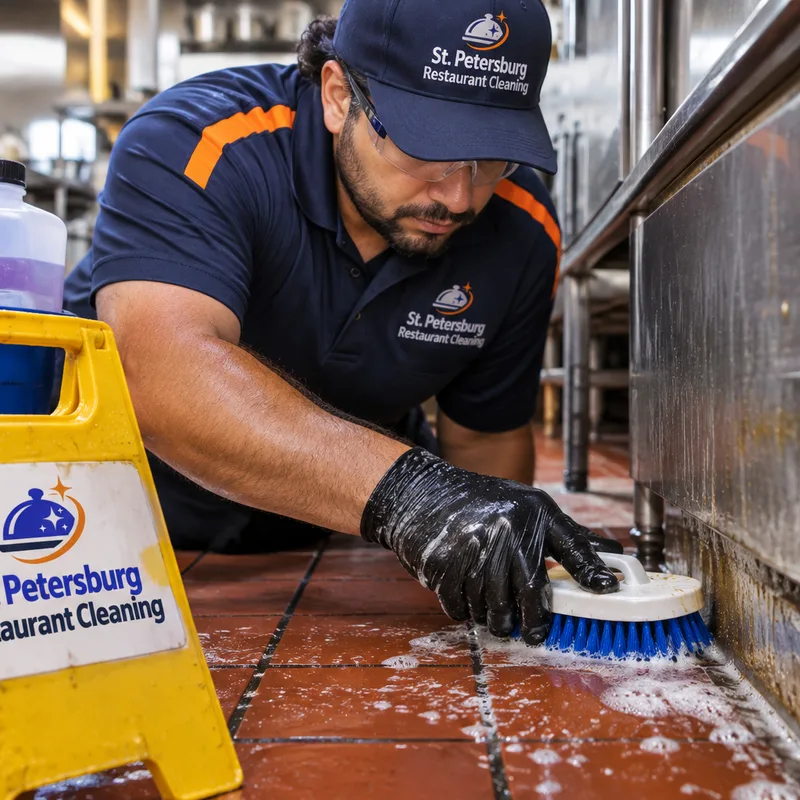
The right method depends on the surface and the soil. Grease on quarry tile needs a different approach than fingerprints on stainless steel or drink residue on a finished wood bar. Using the wrong chemical can dull a finish, leave a film, create a slippery floor, or damage grout and metal. Product labels and manufacturer care instructions guide the choice.
Cleaning and sanitizing are separate actions. Cleaning removes food soil, grease, and debris. Sanitizing reduces microorganisms on a cleaned surface when an appropriate product is applied at the correct concentration and for the required contact time. Disinfection may be assigned to restroom fixtures and other suitable non-food-contact surfaces. A product should never be mixed with another chemical unless its label specifically permits it.
Local operations also shape the schedule. Beach-area restaurants may need entrance and dining-floor attention after heavy foot traffic. Cleveland Street businesses can have limited service windows tied to closing routines and shared-building access. Restaurants along Gulf-to-Bay Boulevard may need schedules planned around steady customer turnover and delivery activity. These operational details determine crew timing, access, and task frequency.
Local Pricing
Recurring restaurant cleaning in Clearwater typically costs about $0.10 to $0.30 per square foot per visit, while small locations may have minimum charges of roughly $150 to $350. Detailed kitchen degreasing or an initial deep clean can run about $500 to $2,500 or more, depending on scope. Final pricing changes with square footage, visit frequency, grease buildup, floor type, restroom count, access, service timing, and whether supplies are included. The exact cost is confirmed after a walk-through and written scope.
Arrange a walk-through to define cleaning zones, service frequency, access requirements, and a written scope that fits your restaurant's hours.
Call for a Free QuoteHiring Checklist
Ask for a task list that names the surfaces and frequencies included in the price. Phrases such as “clean the kitchen” leave too much open to interpretation. A useful scope states whether the work includes equipment exteriors, floor drains, walls, baseboards, entry glass, interior windows, waste areas, booth details, or moving lightweight items.
Confirm who supplies chemicals, liners, paper products, and cleaning equipment. Managers should also ask how products are labeled and stored, how restroom tools are separated, and how wet-floor hazards are controlled. Safety Data Sheets should be available for workplace chemicals, and each product should be used according to its label.
Commercial kitchen exhaust hood and duct cleaning is a specialized fire-safety service and should be handled by a qualified provider. Pest control, grease-trap pumping, equipment repair, and hazardous-material cleanup also require their own contractors. A dependable restaurant cleaning company identifies those boundaries instead of quietly leaving important assumptions unresolved.
It is also worth agreeing on communication before the first visit. Decide who can approve extra work, how missed access is handled, where completion notes go, and how quickly a concern should be reported. That preparation makes recurring service easier to manage.
Practical Answers
The right frequency depends on operating hours, customer volume, menu, floor materials, and what the in-house team handles. Busy kitchens and guest restrooms may need service after every operating day, while ledges, baseboards, walls, and other detail items can follow a rotating schedule. Beach-area entrances may require more frequent mat and floor attention because guests can track in sand and moisture.
Yes, off-hour cleaning can be arranged when crew availability, access, alarm procedures, and building rules allow it. The walk-through should establish who secures food, shuts down equipment, removes obstacles, and provides entry. For downtown Clearwater restaurants with tight reopening windows, the task list must fit the time actually available.
Routine cleaning may include accessible exterior hood surfaces when they are listed in the scope, but internal exhaust hood, fan, and duct cleaning requires a qualified specialist. That work involves grease-removal and fire-safety procedures beyond ordinary janitorial cleaning. The boundary should be written into the proposal so managers can schedule both services correctly.
An initial deep clean is often recommended when grease, floor buildup, wall spots, or neglected detail areas cannot be corrected during a normal maintenance visit. The walk-through identifies the reset work and separates it from ongoing duties. Once the baseline is established, recurring Restaurant Cleaning Services Clearwater can focus on keeping each assigned area at that level.
Food, utensils, and preparation items generally need to be protected or removed from the immediate work zone before chemicals are used. The exact preparation depends on the product label, surface, and assigned task. Restaurant staff and the cleaning crew should agree on shutdown and storage responsibilities during the initial walk-through.
Pricing requires the restaurant's approximate size, cleaning zones, visit frequency, operating hours, floor types, restroom count, kitchen condition, access requirements, and requested detail work. A site visit is more reliable than pricing from square footage alone because grease buildup, furniture density, equipment layout, and limited access can change labor time.
Plan the Work
Tell St. Petersburg Restaurant Cleaning about your Clearwater location, operating schedule, and priority areas. We will discuss the scope and outline a practical cleaning plan before service begins.